

Is Tapzi Legit? Honest Review of the Skill-to-Earn Web3 Gaming Platform
We believe in full transparency with our readers. Some of our content includes affiliate links, and we may earn a commission through these partnerships. However, this potential compensation never influences our analysis, opinions, or reviews. Our editorial content is created independently of our marketing partnerships, and our ratings are based solely on our established evaluation criteria. Read More


The world of Web3 gaming is still searching for its breakthrough moment. The first wave of “play-to-earn” (P2E) games promised to let players earn while having fun, but most collapsed under the weight of unsustainable economies and uninspired gameplay. Tokens inflated and crashed, bots drained rewards, and onboarding felt like solving a puzzle before you could even click “play.”
Now, a new platform is stepping into that space with a very different philosophy. Tapzi, built on the BNB Smart Chain, brands itself as the world’s first skill-to-earn Web3 arcade, a place where your ability, not chance or endless grinding, determines whether you win.
Instead of relying on luck or hoping a token’s price skyrockets on hype, Tapzi lets players go head-to-head in real, competitive matches. The games are quick and easy to pick up, think chess, checkers, tic-tac-toe, rock-paper-scissors, and other classic skill-based challenges. Every game is recorded on the blockchain for transparency, and when it’s over, the winner instantly claims the prize pool both players put up.
But Tapzi is aiming higher than just a few browser games. The team envisions an entire ecosystem for skill gaming, including developer tools to publish new games, an anti-cheat system powered by AI, and smooth cross-platform play with no downloads and no gas fees. Its mission: to make blockchain gaming as easy and fair as casual mobile play, while finally creating an economy that does not implode when the hype fades.
Why Tapzi Exists — Solving GameFi’s Core Problems
When the “GameFi” boom began, it looked revolutionary. Axie Infinity, StepN, and other titles drew headlines and millions of players. But they shared deep structural flaws:
- Luck-heavy mechanics: Earning often depended on random drops or probability rather than actual talent.
- Token inflation: Games printed new tokens endlessly to reward players, but demand could not keep up. Prices collapsed.
- Bot farming: Automation ruined competitive integrity and drained rewards from honest users.
- Steep onboarding: To even start, players needed wallets, crypto, and often expensive NFTs, a massive turn-off for casual gamers.
- Slow performance: Fully on-chain actions could not match the speed of real-time gameplay.
Tapzi’s founders built their platform to reverse each of those issues. Their mantra — Click. Play. Compete. — is meant to signal frictionless entry and true meritocracy—no token faucets, no over-complicated DeFi mechanics disguised as gaming; just fair competition with verifiable outcomes.
Tapzi’s Core Features — More Than Just “Another Crypto Game”
Skill-to-Earn: A True Competitive Economy
Most Web3 games treat tokens as rewards for activity, but activity alone does not equal value. Tapzi flips this: you only earn when you win. Players choose a stake in $TAPZI tokens to enter a 1v1 match; both stakes form the prize pool; the winner instantly gets paid.
Because rewards come from other players, the system is zero-sum and economically sustainable, closer to a poker table or esports tournament than a yield farm.
Seamless, Gasless Web3 Access
For mainstream gamers, wallet setup and gas fees are deal-breakers. Tapzi removes that pain:
- You can play instantly with no wallet or crypto to practice and get comfortable.
- Games run directly in mobile or desktop browsers, no apps or downloads.
- Matches are designed to feel gasless, gameplay happens off-chain, and only final results are written to the blockchain, reducing (but not eliminating) transaction costs.
The result is a user experience that feels like any casual online game, but with real crypto rewards waiting once you’re ready to compete.
Real-Time Gameplay With Blockchain-Verified Results
Blockchain security and real-time gaming do not usually mix well, but Tapzi bridges the gap with a smart hybrid setup. The gameplay itself runs off-chain, so matches stay fast and smooth, while the final results are securely signed and recorded on the blockchain. Once the outcome is locked in, smart contracts handle payouts automatically, with no delays, no middlemen.
It’s smooth and instant like Web2, but transparent like Web3.
Fair Matchmaking & AI Anti-Cheat
Fair competition is central to Tapzi’s idea. Tapzi says it wants matches to feel fair. It plans to rank players using a system like the one chess and esports use, so you’re paired with someone close to your level. They’re also working on tools to spot cheating and block bots, though those haven’t been proven yet. The idea is that you should only win by actually being better than the other player, not by gaming the system.
Familiar Games That Lower Barriers
Tapzi isn’t trying to reinvent how games work. It sticks to classics most people already know, chess, checkers, tic-tac-toe, rock-paper-scissors, and a few others. That way, there’s almost nothing new to learn. You can jump in right away and focus on playing better instead of figuring out complicated rules.
Sustainable Tokenomics
Tapzi avoids the inflationary trap:
- Fixed supply: Only 5 billion $TAPZI tokens will ever exist.
- No emission-based rewards: Winners earn from prize pools.
- Vesting: Team and presale tokens unlock slowly to avoid dumps.
- Treasury & marketing allocations: Support growth and stability without oversupply.
We’ll break down the token economy in more detail later.
Cross-Platform, Multi-Chain Future
Tapzi is mobile-first and browser-based, but also forward-looking. The roadmap includes expanding beyond BNB Chain to Ethereum, Polygon, and even TON (Telegram Open Network) to tap into the viral casual gaming scene.
Visual Snapshot: Tapzi’s Launch vs Expansion
| Phase | Key Milestones |
| Q4 2025 | PancakeSwap listing, mainnet launch, first global tournament, mobile PWA release |
| Q1 2026 | NFT avatars & cosmetic store, guild/private tournaments, Tier-1 CEX pursuit, multilingual support |
| Q2 2026 | Developer SDK launch, global tournament league, analytics & fair play dashboard, cross-chain deployment |

User Experience — Built for Real People
Tapzi’s design shows a strong understanding of how gamers think.
For casual players, it feels approachable. You can open the site and immediately play without worrying about wallets or tokens. Matches are quick, usually five to fifteen minutes, and perfect for mobile. Only after you’re comfortable do you need to touch crypto; then you can stake a token or two and start competing for real.
For competitive gamers, there’s depth. Global leaderboards, ELO-based ranking, tournaments, and seasonal events add prestige and stakes. The thrill isn’t just about tokens, it’s about climbing and proving skill.
For communities and streamers, Tapzi is building social hooks. Guild spaces and private lobbies are planned so groups can host their own contests or tournaments, much like esports clans or Discord gaming hubs.
Visual: Token Utility At A Glance
| Utility | Description |
| Match Entry | Stake $TAPZI to enter 1v1 games; winner gets prize pool |
| Tournaments | Seasonal events, sponsored championships paid in $TAPZI |
| Staking | Unlock VIP modes, early access, loyalty perks |
| Cosmetics (NFTs) | Buy avatars, skins, victory animations |
| Referrals | Earn tokens for inviting new players & staying active |
The $TAPZI Token — Building a Sustainable Economy Around Skill
At the heart of Tapzi’s vision is its utility token, $TAPZI. Unlike many GameFi coins that existed mostly as speculative chips, $TAPZI is designed with practical, repeatable demand. Its value comes directly from platform use: you need it to play, to compete, to customize your profile, and to join tournaments.
The token’s design tries to answer the hard lessons of early P2E. Most of those projects flooded the market with inflationary rewards, thinking they were “incentivizing adoption.” Instead, prices collapsed as soon as growth slowed. Tapzi’s model looks more like competitive poker or esports betting; players fund their own prize pools, so the platform does not need to mint new tokens every time someone wins.
Core Utility
When you break down $TAPZI’s roles, you see a tight feedback loop:
- Match entry fees: In every head-to-head game, both players put in some TAPZI tokens. Whoever wins takes the whole pot; if you lose, your stake goes to the other player.
- Tournaments: There will be both community-run and official tournaments with prize pools paid out in TAPZI. Most of the prize money comes from player entry fees, but Tapzi may add extra rewards for significant events.
- Staking perks: If you lock up your tokens for a while, you can get special benefits like access to exclusive tournaments, early game modes, or higher daily limits.
- Cosmetics: Tapzi plans a store where you can buy things like avatars, skins, or victory animations. These don’t affect gameplay but let you customize your profile and spend TAPZI in ways similar to how skins work in popular games.
- Referral and activity rewards: You can earn bonus TAPZI for inviting friends, playing often, and hitting certain milestones — a way to keep the community growing and active.
Think of it as a closed economy where tokens circulate between players, creators, and the platform rather than endlessly printing out of nowhere.
Tokenomics Structure
Here’s a simplified breakdown of Tapzi’s token distribution:
| Allocation | Percentage | Notes |
| Presale | 20% | Sold in a multi-phase presale, with vesting to slow sell pressure |
| Liquidity & Listings | 20% | Provides exchange liquidity; PancakeSwap first, Tier-1 CEX planned |
| Team | 10% | Locked for a minimum of 12 months to align incentives |
| Development & Ecosystem | 10% | Continuous platform growth and grants |
| Marketing & User Growth | 10% | Influencer campaigns, tournaments, and onboarding |
| Community Rewards & Airdrops | 10% | Referral bonuses, early adopter rewards, and event incentives |
| Treasury | 15% | Locked reserve for partnerships and long-term stability |
| Other/Reserves | 5% | Buffer for unforeseen ecosystem needs |
Supply is capped at 5 billion tokens. Crucially, the team and presale allocations are vested; only 25% of presale tokens unlock at launch, with the rest dripping out over several months. Team tokens are fully locked for at least a year. This reduces the risk of “dump and crash” scenarios.
Economic Flow & Why It’s Different
Most GameFi models rewarded “doing” (e.g., breeding Axies, clicking to earn) with freshly minted tokens. This caused a runaway supply. Tapzi doesn’t reward time; it rewards winning. That means token outflows are balanced by player inflows: losers fund winners.
If Tapzi grows and attracts more players, demand for $TAPZI rises because people need tokens to play and to customize their experience. Meanwhile, the fixed supply and vesting protect against runaway inflation.
Of course, this system assumes there’s an active, engaged player base. If user numbers stagnate, token demand could too. That’s why Tapzi’s roadmap is so focused on player acquisition and retention.
Developer Ecosystem — Turning Tapzi Into a Web3 Arcade
Tapzi isn’t just trying to be one game; it’s aiming to be a platform.
Developer SDK (Planned 2026)
In Q2 2026, Tapzi plans to release its Developer SDK (Software Development Kit), essentially a plug-and-play infrastructure for building skill-based games:
- Matchmaking and staking: Developers don’t need to code their own ranking systems or crypto escrow; Tapzi provides it.
- Anti-cheat and fair play: New games automatically tap into Tapzi’s AI anti-cheat and verification system.
- Instant liquidity and players: Launching inside Tapzi gives developers access to an existing user base and a token economy.
- Monetization options: Studios can take a share of entry fees or sell their own cosmetic NFTs inside Tapzi.
If this model works, Tapzi could become something like the Steam of Web3 skill games, but with built-in tokenized incentives. Each new game adds value to the network by increasing content and driving more token usage.
Community & Social Layers
Tapzi also plans to integrate guilds, private lobbies, and creator spaces. This is a smart move: Web3 guilds were major growth engines for Axie Infinity and other early games. By giving communities dedicated spaces to host tournaments and events, Tapzi can encourage organic viral growth.
For influencers and streamers, the ability to run private matches with prize pools could create engaging content, and viewers might even join in and compete.
Roadmap — Ambitious but Focused
Tapzi has laid out a two-year plan that’s unusually detailed for a crypto project. Here’s how it unfolds:
| Quarter | Focus | Milestones |
| Q4 2025 | Launch | PancakeSwap token listing; mainnet release with 40+ games; first global tournament; mobile PWA |
| Q1 2026 | Growth | NFT avatars & cosmetics; guild & private tournaments; Tier-1 CEX pursuit; localization for major languages |
| Q2 2026 | Expansion | Developer SDK v1; global tournament league; analytics & fair play dashboards; cross-chain deployment (Ethereum, Polygon, TON) |
| Beyond | Scale | Continuous content, esports partnerships, and mass player adoption |
This staged approach matters. Tapzi isn’t trying to ship everything at once. Instead, it’s proving core gameplay first, then layering social and developer tools, and finally scaling across chains.
Why the Roadmap Matters
Crypto gaming projects often fail because they over-promise and under-deliver. Tapzi’s roadmap is ambitious but sequenced realistically: first, get players; then, build community and creators; then, scale cross-chain and into esports.
Still, execution risk is real. Each phase needs to hit adoption goals, or the economy could stagnate. The Q4 2025 launch is critical; if player numbers disappoint early, momentum could slow.
Competitive Landscape — Where Tapzi Fits
Tapzi plays a distinct role in the Web3 gaming landscape.
Versus classic P2E games (Axie, StepN): Tapzi fixes token inflation by funding prizes from players, not minting. It also drops NFT barriers and grinding. Players can start free and earn only by winning, meritocracy rather than farming.
Versus Telegram mini-games: Telegram titles like Notcoin went viral for being frictionless, but they’re shallow and off-chain. Tapzi offers similar instant access but with real skill depth and on-chain fairness. If Tapzi integrates with Telegram (planned via TON), it could capture that huge casual audience.
Versus meme coins: Many hot presales are pure hype. Tapzi is product-first, with real token demand and audited contracts. That gives it staying power beyond speculative cycles.
Versus other Web3 gaming hubs (Chain Games, Arcade): Tapzi differentiates with multi-game content + developer SDK + strict anti-cheat. It feels less like gambling, more like esports.
To help visualize how Tapzi compares to other popular crypto gaming models, here’s a quick side-by-side look:
Feature Comparison: Tapzi vs Other Crypto Gaming Models
| Feature | Tapzi | Traditional P2E Games | Telegram Mini-Games | Meme Tokens |
| Core Gameplay | Skill-based matches using classic games (chess, checkers, tic-tac-toe, RPS) | Often grind-heavy with complex mechanics and NFT farming | Simple casual taps & clickers | No gameplay, purely token speculation |
| Reward Model | Skill-to-Earn: Winners take the staked TAPZI prize pool | Token emissions & NFT rewards (often inflationary) | Usually, there are no crypto rewards or just leaderboard badges | None, price only moves with hype |
| Economy Sustainability | Balanced: fixed supply + recycled staked tokens | Prone to inflation and token price crashes | No real token economy | 100% speculative, no economic design |
| Onboarding & Accessibility | Gas-free matches, multi-chain payment options, casual games anyone can play | Often requires NFTs, high upfront cost, and multiple wallets | Very easy, play instantly in-app | Easy to buy, but no product behind it |
| Cheat Prevention | AI anti-cheat + ELO matchmaking | Varies widely, many exploitable | Minimal to none | Not applicable |
| Community Incentives | Staking perks, referral rewards, airdrops, and tournaments | Guilds, breeding, NFT flipping | Leaderboards, social sharing | Hype, memes, social virality |
| Developer Ecosystem | Open launchpad for new skill-based games | Closed or complex; devs need deep game design expertise | No developer tools | None |
| Token Utility | Match entry fees, tournament prizes, cosmetics, staking perks | Usually just reward payouts, governance | Often, there are no token or off-chain points | None, token is pure speculation |
| Long-Term Potential | Broad casual gaming market + fair, competitive economy | Struggles with retention & token crashes | Great for user growth, but no monetization | Hype-driven, short-lived trends |
Risk & Reward Perspective
No review is complete without looking at the risks.
- Adoption risk: Tapzi still needs to turn presale excitement into a real, active player base, and not just casual users, but enough players at different skill levels to keep matchmaking fair and competitive.
- Market risk: Like all GameFi projects, Tapzi lives inside the larger crypto market. If the market turns bearish, activity and enthusiasm can slow down.
- Regulatory risk: Skill-based wagering with tokens could draw attention from regulators in certain regions. Navigating those rules will be important for growth.
- Execution risk: Tapzi’s roadmap is ambitious. Missed deadlines or slow delivery could test the patience of early supporters.
- On the upside: the fundamentals look solid, a functioning product, strong reported fundraising, an audited and KYC-verified team, and a clear product-market fit in competitive casual gaming.

Tapzi Review Verdict — Legit Project or Just Hype?
The idea behind Tapzi is straightforward but potentially game-changing: bring competitive skill back to gaming and finally build a Web3 economy that doesn’t break itself. If the platform executes, it could be the first to merge the casual accessibility of mobile mini-games with the fairness and transparency of blockchain, all while offering real financial incentives for those who can win.
👉 Learn how to buy Tapzi.
Why Tapzi’s Model Could Work
- It mirrors familiar competitive formats: Tapzi’s staking-and-reward loop is closer to real-world tournaments or poker tables than to DeFi token farming. There’s no “inflation faucet”, rewards come from other players. That’s sustainable as long as there’s an active player base.
- It’s easy to try: You do not need a wallet or crypto to get started; you can play for free first. Games are recognizable and quick. The psychological barrier to try is far lower than that of previous GameFi apps.
- It’s fair by design: ELO matchmaking and anti-cheat AI keep competition honest. On-chain settlement ensures winners are paid instantly and transparently.
- It’s expandable: The Developer SDK could open the floodgates for new games and genres, while the roadmap’s cross-chain push gives access to multiple ecosystems and user pools.
Potential Catalysts for Growth
- Mobile-first design — If Tapzi can feel as natural on a phone as mainstream mobile games, it can attract casual players globally.
- Community tournaments and esports leagues — These could create viral moments and establish Tapzi as the default home for skill-based crypto gaming.
- Telegram/TON integration — Tapping into the audience that made Notcoin and Hamster Kombat explode could be huge.
- CEX listings — Tier-1 exchange access (Binance, Coinbase) would bring liquidity and awareness to $TAPZI.
Risks to Watch
- Adoption cliff: If the post-launch hype fades and DAU (daily active users) stalls, token demand might lag.
- Skill barriers: True competition can be intimidating; Tapzi must balance casual fun with competitive depth so new players don’t churn.
- Market volatility: Crypto market downturns could affect token price and new user growth.
- Regulatory clarity: Some regions may question skill-based crypto wagering; Tapzi might need clear compliance strategies.
Investment View
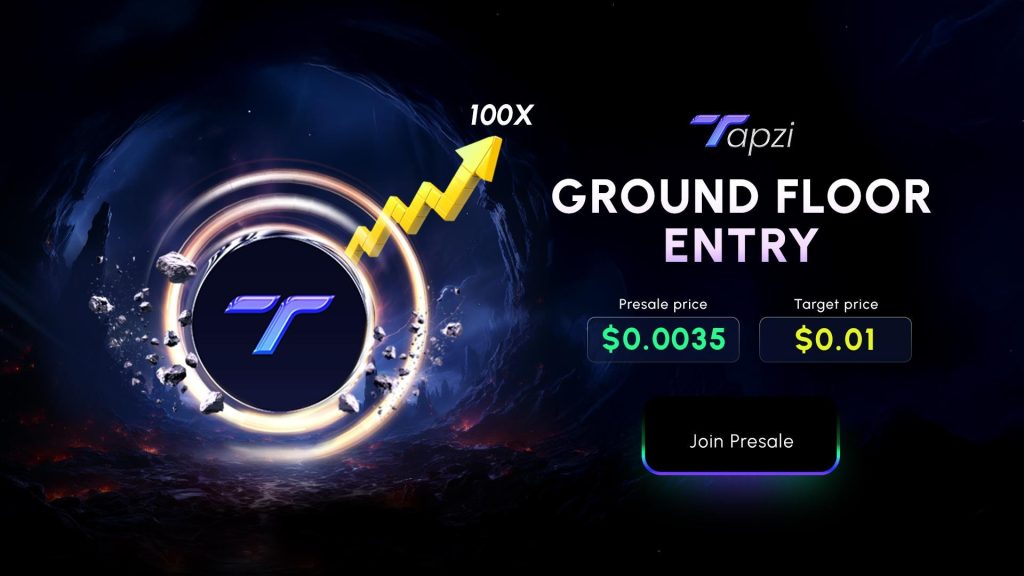
Tapzi reports having raised a significant amount in its presale, among the larger GameFi fundings of 2025, and the token’s early pricing structure is appealing (initial presale starting at $0.0035, with the team indicating a potential public launch target near $0.01). However, this remains an early-stage venture in a volatile sector. Success will depend on real user adoption and developer participation.
Unlike many hype-driven meme coins, Tapzi positions itself as product-first, with audits and a practical roadmap. Still, it’s a high-risk/high-reward opportunity.
What Tapzi Could Mean for the Industry
If Tapzi works, it could reset the narrative of blockchain gaming. Instead of “play-to-earn”, which often meant “click to farm tokens until the music stops”, we could move to skill-to-earn, where real competition drives value.
That’s good for Tapzi, but also for the entire sector. Sustainable token economies and fair on-chain competitive frameworks could attract mainstream gamers who so far haven’t trusted crypto games. Developers could finally have a platform where building fun, skill-based titles makes economic sense.
It could also signal the birth of on-chain esports, where everything from prize pools to match verification happens transparently and instantly.
Conclusion — Tapzi’s Moment to Prove Itself
Tapzi is launching with something rare in Web3: a clearly defined product that solves obvious pain points. There’s a working platform, audited contracts, and a clear two-year roadmap.
But this is also the make-or-break stage. Q4 2025’s mainnet launch and first tournaments will decide if Tapzi’s vision translates into daily active players. By mid-2026, we’ll know if developers have embraced the SDK and if Tapzi can scale across chains.
For players, Tapzi offers a new way to test skill and potentially profit from it, without grinding or gambling. For developers, it’s an on-ramp to a ready-made economy and audience. For investors, it’s a high-upside but execution-dependent bet on the next phase of GameFi.
The message Tapzi wants the industry to hear is simple:
Gaming should reward skill, not speculation.
If it can back that up with fun gameplay and a thriving community, Tapzi might become the first central platform to deliver sustainable Web3 gaming at scale.
Frequently Asked Questions
Is Tapzi audited?
Tapzi has undergone an audit by Coinsult, and the team has completed KYC verification with SolidProof. A CertiK audit is reportedly in progress, but the final report has not yet been published. Investors should review the available audit reports and check the token contract on BscScan before participating.
How do Tapzi matches work?
Players choose a stake in $TAPZI tokens to enter a 1v1 skill-based match (e.g., chess, checkers, tic-tac-toe). Gameplay runs off-chain for speed, while the match result is signed and recorded on-chain. The winner automatically receives the combined prize pool from both players’ stakes.
Is Tapzi live or still in presale?
Tapzi is currently in its presale stage. The core platform and demo games exist, but the full game library, tournaments, and token trading aren’t fully launched yet. The roadmap targets Q4 2025 for the mainnet and initial tournaments.
Join Tapzi’s official $500,000 giveaway. Participate here: https://tapzi.io/giveaway-500
- XRP News: AI Payments Integration With Stripe Driving Ripple Toward $1.50
- Contrarian Crypto Analyst Who Predicted 2026 Perfectly Calls for Caution and Q4 Crash
- Can Ripple Crack $1.80? XRP Price Prediction Says This Week
- XRP News: Exchange Churn Surges, Binance Reserves Barely Move
- Ripple Clears $1.50: XRP Price Prediction Says $2 Next?
2M+
250+
8
70





- XRP News: AI Payments Integration With Stripe Driving Ripple Toward $1.50
- Contrarian Crypto Analyst Who Predicted 2026 Perfectly Calls for Caution and Q4 Crash
- Can Ripple Crack $1.80? XRP Price Prediction Says This Week
- XRP News: Exchange Churn Surges, Binance Reserves Barely Move
- Ripple Clears $1.50: XRP Price Prediction Says $2 Next?
More Articles
 in numbers