

Solana or SpacePay? Which Project Has the Bigger Real-World Potential?
 Blockchain
We believe in full transparency with our readers. Some of our content includes affiliate links, and we may earn a commission through these partnerships. However, this potential compensation never influences our analysis, opinions, or reviews. Our editorial content is created independently of our marketing partnerships, and our ratings are based solely on our established evaluation criteria. Read More
We believe in full transparency with our readers. Some of our content includes affiliate links, and we may earn a commission through these partnerships. However, this potential compensation never influences our analysis, opinions, or reviews. Our editorial content is created independently of our marketing partnerships, and our ratings are based solely on our established evaluation criteria. Read More


Solana may be racing ahead in blockchain speed – but a new name, SpacePay, is quietly rewriting what real-world crypto use could look like. The project’s goal is refreshingly simple: make it possible to spend digital money anywhere a card is accepted.
Crypto has often promised real adoption, but most tokens stay stuck on trading screens instead of being used in stores. SpacePay is taking a different path, building technology that lets everyday businesses accept crypto payments through the same machines they already have.
As Solana continues to power the blockchain world, SpacePay is aiming for something even bigger – bringing crypto into everyday life.
Solana’s Speed Is Impressive – But Can It Keep Up?
Solana has built a name for speed. It can process thousands of transactions every second and has turned into a lively network filled with apps, NFTs, and DeFi projects. Its quick performance and low costs make it a favorite among developers who want a system that works fast without breaking the bank.
Recently, though, Solana’s price has been trading between $170 and $200. The excitement that once fueled its big jumps has cooled, and trading has slowed down. Some think it could rise again if it pushes past $210, but others believe its biggest gains may already be behind it.
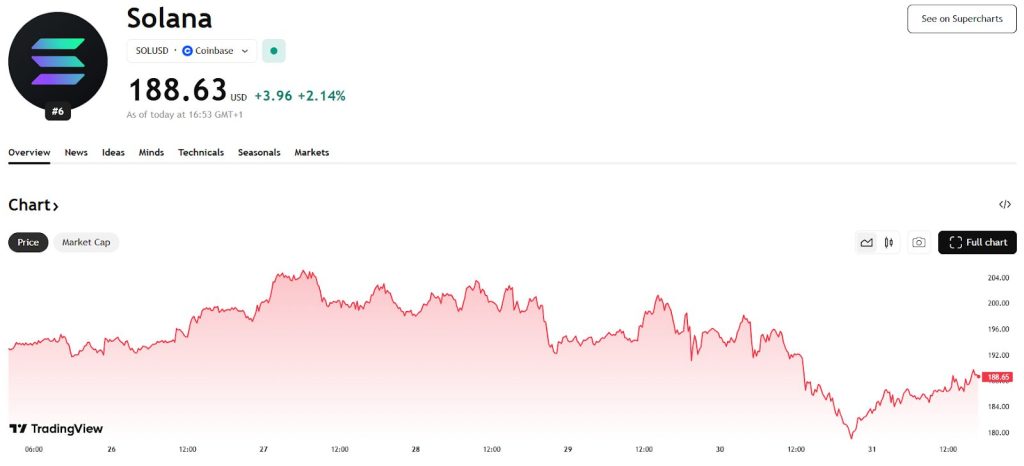
Source: TradingView
Solana ETFs are starting to attract more money, and some funds that were leaving Bitcoin and Ethereum ETFs seem to be moving into altcoins like Solana. Investors are looking for better staking rewards and new stories in the market.
The Bitwise Solana ETF recently jumped almost five percent. However, the SOL token itself still fell about eight percent this week as the price continues to move sideways.
For all its success, Solana still focuses mostly on the tech under the hood – the parts that keep apps and systems running smoothly. That’s important, but it’s not something most people ever notice. For anyone outside the developer community, Solana can feel distant – a powerful system, but not one that fits easily into daily life.
That’s exactly where SpacePay takes a different path, offering something simpler and far more practical.
How SpacePay Turns Crypto Into Something You Can Actually Use
SpacePay is building something that makes existing crypto usable. Its technology allows merchants to accept digital currency through their existing Android-based card terminals. No new hardware, no complex setup. Just a simple software update that turns regular payment machines into crypto-ready systems.
The platform already works with over 325 wallets, giving customers freedom to pay with whatever app or coin they prefer. A person could walk into a store, pay with Bitcoin, Ethereum, or a stablecoin like USDT, and the merchant would receive the same amount in local currency – instantly.
That instant fiat conversion is one of SpacePay’s smartest moves. It removes the risk of price drops after a sale, which has long stopped businesses from accepting crypto. Merchants don’t hold any tokens, so they don’t have to worry about volatility or technical issues.
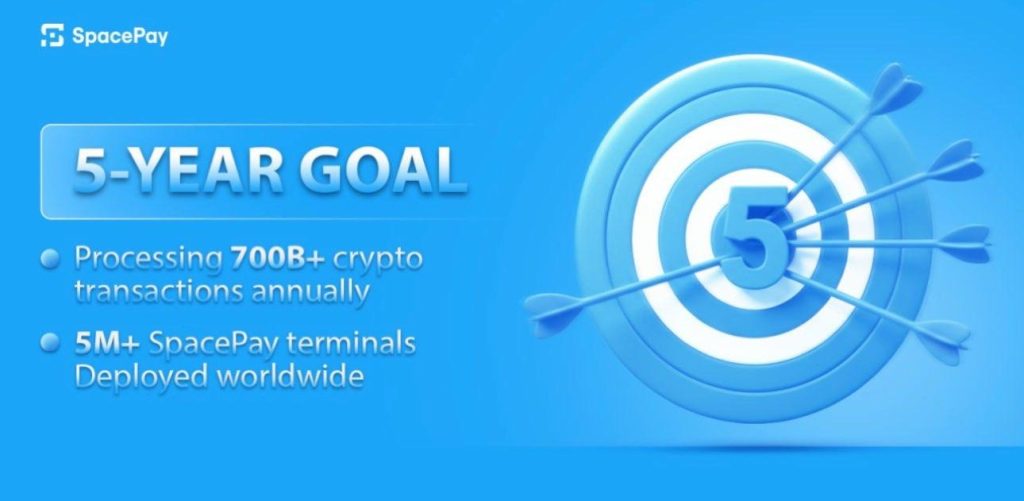
The cost advantage is another big win. SpacePay charges just 0.5% per transaction, far lower than the 2%-4% many credit card processors take. For small businesses, that difference adds up quickly.
Security is baked into how SpacePay works. Every payment is protected with encryption and checked instantly, so nothing slips through. Merchants don’t touch crypto themselves, which keeps things simple and safe on their end.
Payments are completed in seconds, and funds reach their accounts immediately. It’s designed to feel as natural as paying with a card – just powered by blockchain behind the scenes.
Why 2025 Might Belong to SpacePay
Solana has built a reputation for speed. It processes thousands of transactions every second and has become a popular home for apps, NFTs, and DeFi projects. With fast performance and low fees, it’s the kind of network developers turn to when they want things to run smoothly without huge costs.
Solana’s been holding steady between $180 and $200 lately. The hype has cooled, trading’s slower, and opinions are split – some expect a rebound past $210, others think the peak’s already passed.
When shops start using SpacePay, crypto could become part of daily spending so seamlessly that most people won’t even notice the switch.
SpacePay already has a working Testnet, called SpacePay One, where merchants can try the system in a controlled environment.
The project is still early, but it’s solving a problem the entire industry has struggled with for years: how to make crypto practical for daily use.
Find more information on the links below.
Website | (X) Twitter | Telegram
- Grok AI Predicts XRP Could Hit $40 in 2026 With Landmark Event
- XRP News: Price Ceiling Versus ZEC and QNT Playbook
- XRP Price Battling Resistances as BlackRock Rumors Pop
- Bitcoin Price in Limbo: Congress Lost the Vote, but Fed Sets The Tone
- Perplexity AI Predicts Insane $40 Price Target for XRP: How Did It Get There?
2M+
250+
8
70





- Grok AI Predicts XRP Could Hit $40 in 2026 With Landmark Event
- XRP News: Price Ceiling Versus ZEC and QNT Playbook
- XRP Price Battling Resistances as BlackRock Rumors Pop
- Bitcoin Price in Limbo: Congress Lost the Vote, but Fed Sets The Tone
- Perplexity AI Predicts Insane $40 Price Target for XRP: How Did It Get There?
More Articles

 in numbers